
Basement Waterproofing Across the Kansas City Area

Water leaves clues about where it is getting in. A wet strip along the floor, a damp crack or a sump pump that never shuts off each point to a different problem.

Before any waterproofing

Finding Where the Water Gets Into Your Basement

Most people call us about the puddle, but the puddle is usually a few feet from where the water came in. Water follows the slope of the floor and can end up well away from the spot where it got through.

Around here, a lot of that water starts in the clay. After a heavy rain, the clay under Johnson County homes holds water against the foundation instead of letting it drain away. That keeps water looking for a path through the wall or floor long after the rain stops.

That wet clay sits against your basement walls. Water can then work through cracks, enter at the seam where the wall meets the floor or collect in window wells with nowhere to drain. Each one takes a different fix, which is why we look at your basement and the yard around it before recommending any waterproofing.

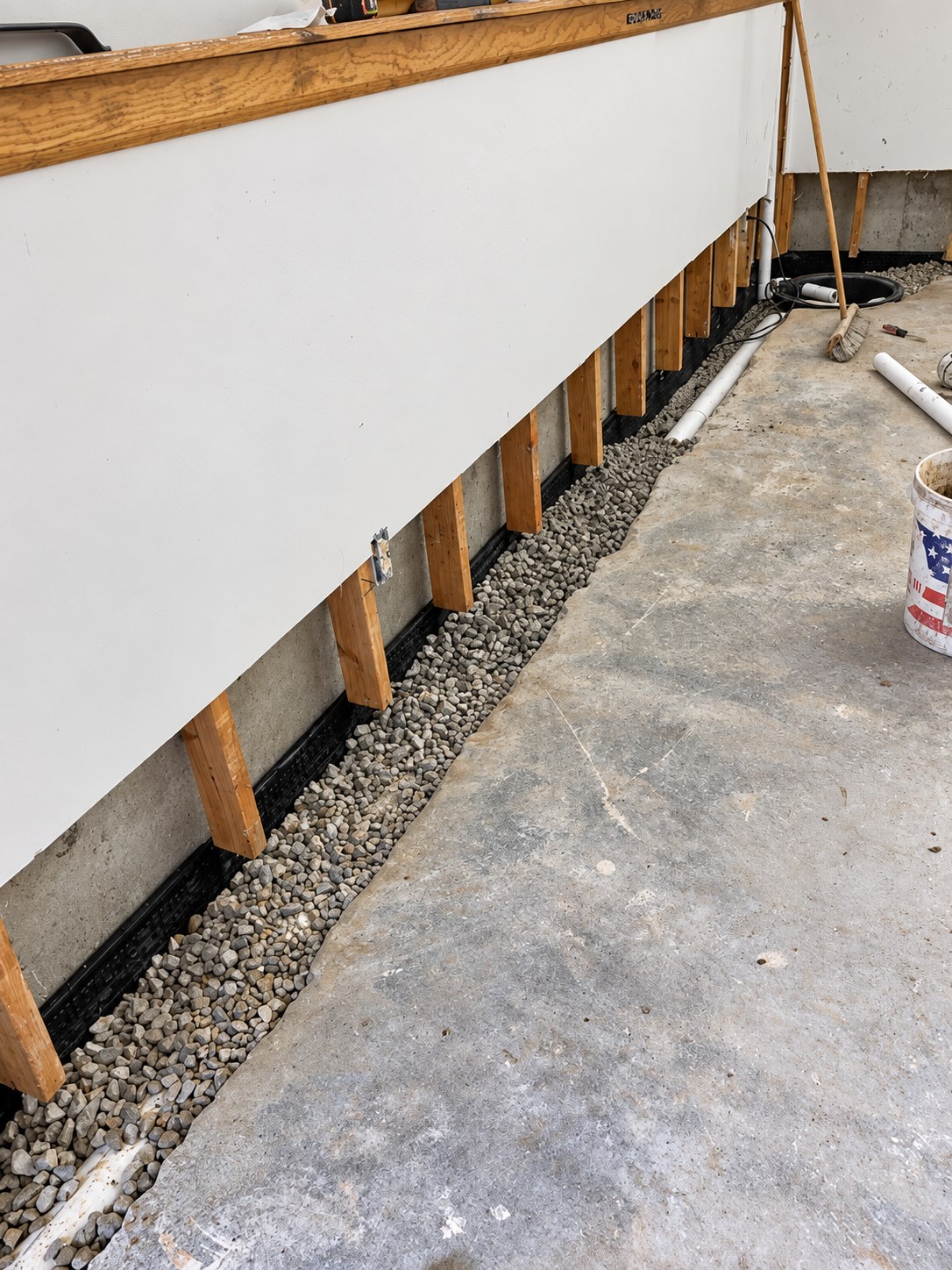
Interior drain tile trench filled with gravel along the base of a basement wall

When Water Gets Into Your Basement

The Signs Tell Us Where Water Is Getting In

Where the water shows up and when it appears helps us find the source and recommend the right repair.

Water Along the Bottom of the Wall

After a heavy rain, a wet strip on the basement floor along one wall usually means water is coming in through the seam at the bottom of the wall.

It often returns in the same spot after each storm and can spread farther across the floor as the ground around the house gets wetter.

Water Coming Through a Crack in the Wall

A crack in a poured concrete wall that darkens or drips after a storm is letting water straight through the wall.

If the crack is getting wider or the wall around it is bulging, that can also mean the wall is still moving.

Water Coming In Under a Basement Window

Water running down the wall below a basement window usually means rain is collecting in the window well outside.

A well full of leaves, mud or standing water is a clear sign the water has nowhere to go before it reaches the window.

A Sump Pump That Runs All the Time

A sump pump that runs every few minutes even when it has not rained for days is working harder than it should.

If you hear it start, stop and start again, water may still be reaching the pit or draining back toward the foundation after it is pumped out.

Soggy Ground Along the Foundation

If the ground beside your house is still muddy days after it rains, water is collecting there instead of draining away.

Look for puddles beside the foundation, a downspout that empties at the base of the house or soil that slopes back toward the wall.

White, Chalky Residue on the Walls

White, powdery crust on a basement wall is called efflorescence. It forms when water works through the wall from outside, then dries and leaves minerals behind.

Even without a puddle, it is a sign that part of the wall gets wet often.

A Musty Smell That Stays

A musty basement smell that does not go away after a dry week means moisture is staying in the basement. It can come from damp air, wet walls or a wet floor.

The smell is often strongest in one corner, near stored boxes or after a stretch of rain.

Finding Water in Your Basement?

Water can get into the same basement in more than one place. Tell us if you find it along a wall, below a window, at a crack, near the sump pit or somewhere else, and when it shows up.\n\nWe inspect your basement in person to trace each place water is getting in. Then you get a written estimate that explains the repairs we recommend, why they fit the problem and what each one costs.\n\nThe inspection and estimate are free, with no obligation.

How we stop the water

The Types of Basement Waterproofing We Do

The fix depends on where the water gets in and when it shows up. Water along the base of a wall after every storm and water at one crack after a long soak can leave the same wet floor, and each one takes a different fix.

01

Interior Drain Tile

Water coming in where the wall meets the floor needs a way to drain before it spreads across the basement.

We open a narrow strip of floor along the wall, lay gravel in the trench and install the drainage system that best fits your basement. Once the floor is restored, the system carries the water to the sump pump, which sends it out of the house.

02

Sump Pump Installation

A sump pump is the part of a waterproofing system that actually moves the water out, so it has to keep up on the wettest day of the year.

We install new pumps, replace pumps that run constantly or do not turn on when the pit fills, and run the discharge line far enough into the yard that the water does not drain back toward your basement.

03

Basement Crack Sealing

Before we seal a crack, we check whether it is a structural problem. A crack in a sound poured concrete wall can still let water through, even when the wall itself is not bowing or settling.

If the crack is not a structural problem, we inject the seal from inside so it fills the crack through the wall. If the wall is bowing or settling, foundation repair comes first, because a seal cannot hold on a wall that keeps moving.

04

Exterior Waterproofing

Sometimes the best place to stop water is on the outside of the wall, before it ever reaches the concrete.

We dig down along the foundation, clean the wall, apply a waterproof membrane and lay a drain at the footing before the soil goes back. It is a bigger job than interior drain tile because we have to reach the footing outside the house. That lets us stop water before it reaches the wall or builds up in the soil against it.

05

Yard Drainage and Downspouts

Most basement water starts as rain that lands near the house and has nowhere else to go.

We extend downspouts, regrade soil that slopes back toward the foundation and install French drains to carry the water away from the house. That takes pressure off every other part of your waterproofing.

06

Window Wells and Egress Windows

Rain has nowhere to drain when a window well is full, so it can collect outside the basement window and leak into the basement.

We install or clear a drain in the well so the rain has somewhere to go. If the window leaks, will not open or is too small for an emergency exit, we can replace the window and well.

Where we work

Serving the Kansas City Metro

We're based in Gardner, and we're a growing company. Right now we're expanding about 45 miles out in every direction, which covers most of the metro on both sides of the state line. Not sure if we make it out your way? Give us a call and ask.

Kansas Service Area
  • Gardner
  • Olathe
  • Overland Park
  • Shawnee
  • Lenexa
  • Leawood
  • Spring Hill
  • Edgerton
  • De Soto
  • Lawrence
  • Eudora
  • Baldwin City
  • Ottawa
  • Paola
  • Kansas City
Missouri Service Area
  • Kansas City
  • Belton
  • Grandview
  • Raymore
  • Peculiar
  • Lee's Summit
  • Raytown
  • Independence
  • Blue Springs
Sage-green split-level home with limestone accents and warm porch lights at dusk

Free estimate

Schedule Your Free Basement Waterproofing Inspection

Tell us where you are finding water and when it shows up. We inspect your basement in person and show you where the water is getting in.

Afterward, you get a written estimate that shows the water problems we found and the repair we recommend for each one. It explains why that repair fits your basement, what the work will cost and how it is meant to hold up over time. The inspection and estimate are free, with no obligation.

Location
Gardner, KS 66030
Hours
Monday to Friday, 8:00 AM to 6:00 PM
Saturday and Sunday, Closed

Prefer to talk? Call (913) 444-0115 during business hours.

FAQs

The Questions We Hear After Water Gets In

Homeowners usually ask these after they have mopped up the basement more than once and want to know what it will take to stop the water.

Why does my basement only leak in the spring?

May and June are the wettest months of the year in Kansas City, and the clay around your house holds on to that rain instead of letting it drain away.

A basement that stays dry most of the year and leaks every spring usually has one weak spot, like a crack, a window well or a low corner of the yard, that only lets water through once the clay against the wall is soaked.

Can I seal my basement walls with waterproofing paint?

Waterproofing paint can help a wall that is a little damp, but it cannot hold back water that wet clay is pushing through the concrete from outside.

That water pushes the paint off the wall from behind, which is why paint bubbles and peels first on the walls that leak the most. Stopping it means sealing the leak from inside the basement or stopping water before it reaches the outside of the foundation wall.

Do I need a sump pump if my basement has never had water in it?

If your basement has stayed dry through several heavy downpours, you probably do not need one.

If your house already has a sump pit, do not assume it is unnecessary just because the basement has stayed dry. The pit may be catching groundwater before it reaches the floor, so it is worth having the system checked before you decide to remove or replace it.

How is basement waterproofing different from foundation repair?

Foundation repair stops a wall or footing from moving. Basement waterproofing stops water from getting into the basement.

Plenty of basements need only one of the two, and some need both, like a bowing wall that also leaks along its crack. In that case the wall gets straightened and braced first, then the water gets stopped, and both are in the estimate you get from us.

Should I waterproof my basement before finishing it?

Yes. Drywall and carpet over a wall that takes on water after a heavy rain will soak it up and start to smell musty, often before anyone notices the leak.

Stop the water first, then finish the basement. If you already have or plan to add an egress window, make sure the window well has a working drain before the walls are closed in. Water sitting in the well can leak through the window or around its frame.